

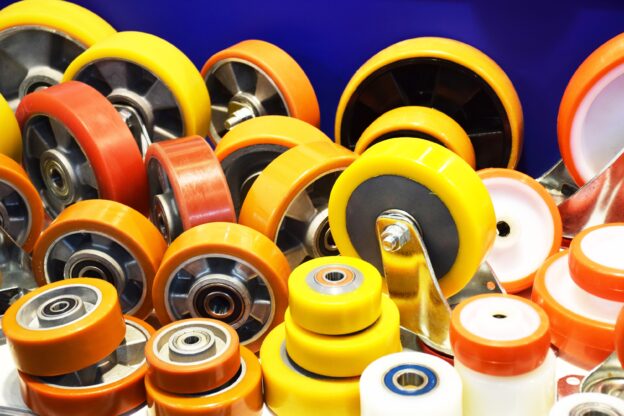
Cast urethane has become one of the most adaptable materials in industrial manufacturing, widely used in seals, rollers, bushings, and precision-molded components that serve sectors from automotive and material handling to aerospace and defense. Its unique combination of durability, elasticity, and chemical resistance has made it a preferred choice for many applications. Yet the terminology surrounding cast urethane and polyurethane chemistry can be difficult to navigate, especially for engineers and OEMs assessing performance characteristics, material formulation, or production requirements for custom molded polyurethane and custom molded rubber parts.
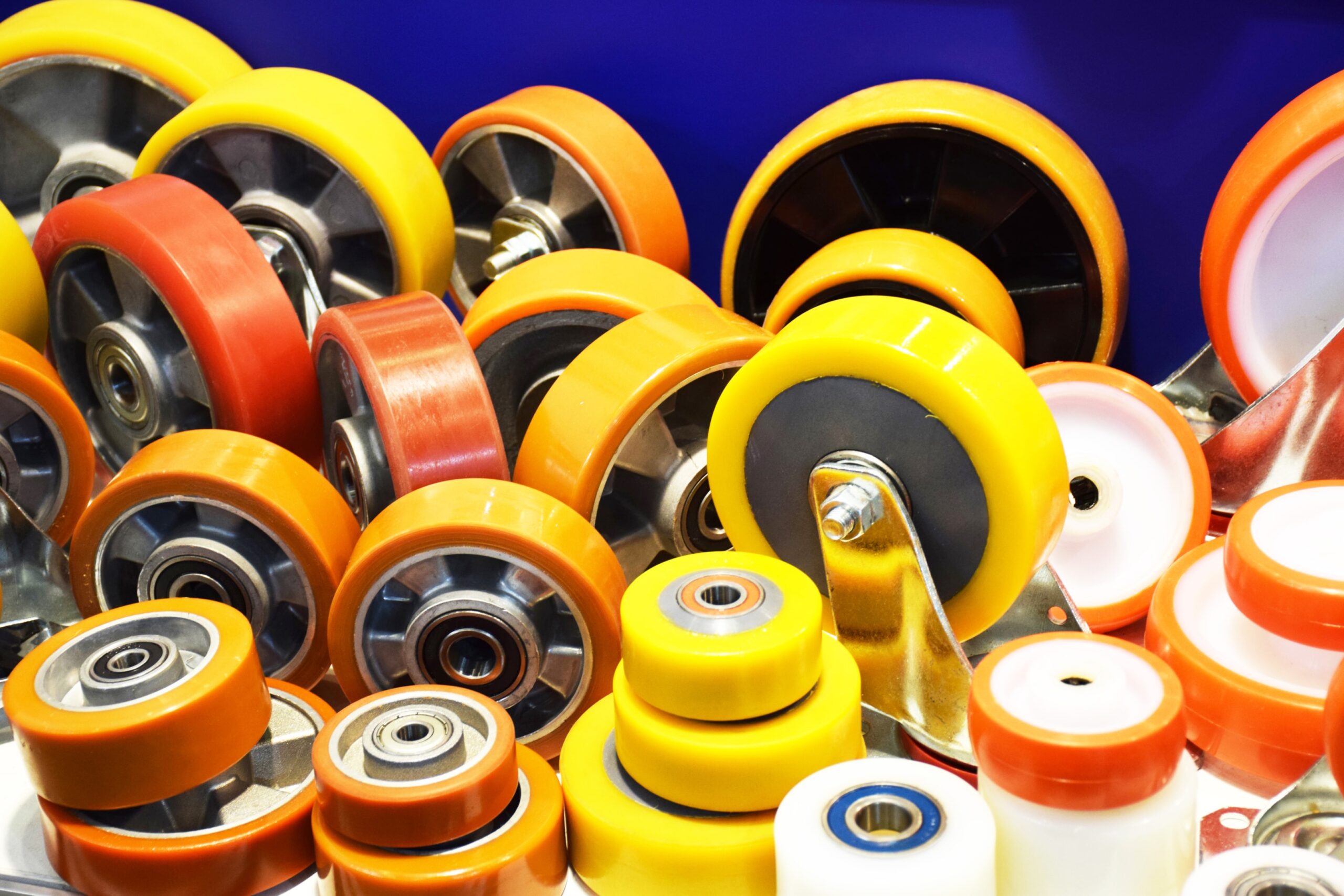
This glossary brings together the most essential cast urethane and polyurethane terms, offering clear and dependable definitions that support accurate communication and stronger technical decision-making. Engineers, designers, and purchasing teams can use this guide as a quick reference to better understand the materials, processes, and variables that influence product design, manufacturability, and long-term performance.
At Uniflex, Inc., we provide custom molded urethane and rubber solutions for engineers, designers, and OEMs across diverse industries. We deliver components that meet exacting specifications—whether rollers, seals, bushings, or complex molded parts—combining advanced material knowledge with hands-on manufacturing experience. Our solutions help optimize performance, reduce wear, and enhance the longevity of your products.
Call us at 248-486-6000 today to discuss your custom urethane and rubber component needs. We’re ready to provide guidance, technical support, and high-quality solutions that bring your designs to life.
👉Also Read: Why OEM Manufacturers Choose Custom Molded Urethane Parts for Precision Components
What is Cast Urethane?
Cast urethane is produced through a liquid molding process in which two primary polyurethane components, isocyanates and polyols, are carefully measured, mixed, and poured into mold material before curing into solid elastomers. This mold-making method allows manufacturers to create highly durable, dimensionally accurate components that perform reliably under demanding conditions.
Unlike thermoplastics, which soften with heat, or traditional rubber compounds that may lack abrasion resistance, cast polyurethane offers an exceptional balance of toughness, elasticity, and customizable hardness. These advantages make it a preferred option for seals, rollers, bushings, and other precision-molded parts used across a wide range of industrial environments.
Silicone molds are particularly well-suited for prototyping and low-volume production runs because they are flexible, capture fine details, and are cost-effective compared with metal molds.
Why Terminology Matters
The terminology associated with cast urethane and polyurethane chemistry plays a central role in defining material behavior, processing requirements, and performance outcomes. Each technical term conveys specific information about hardness, formulation, reaction profiles, or physical properties that directly affect the suitability of a part for its intended application.
For engineers, designers, and OEMs, fluency in this vocabulary helps ensure correct specifications, clearer communication with suppliers, and more efficient development cycles. A solid understanding of these terms lays the groundwork for producing custom molded urethane and rubber components that deliver consistent performance, long service life, and dependable results.
👉Also Read: How Custom Urethane Bushings Improve Vibration Control in Automotive Applications
The Cast Urethane Glossary
Understanding the terminology used in cast polyurethane manufacturing is essential for accurate communication, proper material selection, and consistent production results. The following glossary organizes key terms alphabetically, providing clear and original definitions that reflect the chemistry, performance attributes, and production methods behind custom molded urethane and rubber components.
A
Abrasion / Abraded / Abrasion Test
Abrasion refers to surface wear caused by friction, repeated contact, or sliding motion. Abraded surfaces exhibit visible material loss. Abrasion tests, including ASTM D4060 (Taber Abrasion), measure resistance to surface wear and help determine suitability for high-friction applications such as rollers, belts, and seals.
Accelerated Aging / Life Testing
A controlled laboratory process that uses elevated heat, humidity, UV, or chemical exposure to simulate long-term environmental degradation. Common in validating the expected service life of urethane parts.
Adhesion / Adhesion Failure
Adhesion describes the degree to which cast urethane bonds to substrates such as metal, rubber, or plastic. Adhesion failure occurs when this bond weakens or separates due to contamination, improper surface preparation, or incompatible chemistries.
Additives
Nonreactive materials incorporated into urethane formulations to modify characteristics such as flame resistance, flexibility, UV stability, or pigment color.
Air Checks / Air Oven Aging
Air checks are defects caused by trapped air bubbles during casting. Air oven aging subjects urethane samples to prolonged heat exposure to assess changes in hardness, tensile strength, or elasticity over time.
Alloy
A blend of polymers or elastomers formulated to improve physical properties such as strength, flexibility, or chemical resistance.
Antioxidants / Antiozonants
Special additives used to slow degradation caused by oxygen or ozone exposure. Commonly used in applications requiring outdoor durability.
ASTM / ANSI / ASME
Organizations that establish standard testing and manufacturing specifications for urethane materials. These standards ensure consistency, repeatability, and compliance in industrial applications.
B
Banbury Mixer / Ribbon Blender
Types of industrial mixing equipment used to compound and blend urethane ingredients uniformly. A Banbury mixer provides high shear mixing, while a ribbon blender offers gentler, continuous blending.
Bleeding / Bloom / Blister
Surface defects indicating chemical migration, trapped gases, or moisture contamination. Bloom refers to chemical residue rising to the surface, while blistering typically results from air or moisture trapped within the material.
Bond / Boss / Brand Mark
Bond refers to connection strength between materials; boss refers to a molded feature that provides reinforcement or attachment points; brand mark refers to identifying text or logos molded into a urethane part.
Breaking Strength
The maximum tensile load a material can withstand before rupture.
C
Casting / Cast Film / Catalysts
The urethane casting process involves pouring reactive urethane into molds, where it cures to form durable, precision-molded components. Cast film involves creating thin polyurethane sheets. Catalysts accelerate the chemical reaction during curing.
Chain Reaction / Cross-Linking
The polymerization process that connects molecules to form a thermoset structure. Cross-link density directly influences hardness and mechanical performance.
Compression Set
A measure of permanent deformation after a compressive load is removed. Important for seals, gaskets, and vibration dampers.
Coefficient of Friction
Indicates resistance to sliding. Urethane’s coefficient can be adjusted through chemistry or additives.
Cold Flexibility / Cold Flow
Cold flexibility refers to performance at low temperatures without cracking. Cold flow describes gradual deformation under sustained load.
Cure / Cure Time / Curing Temperature
The chemical process in which polyurethane transforms from liquid to solid. Cure conditions influence hardness, strength, and dimensional stability.
Cycle Time
Total time required to complete a full production cycle from mixing through demold.
D
Deformation / Degradation / Density
Basic physical terms relating to dimensional change under stress, material breakdown, and mass per unit volume.
Delamination
Separation of bonded layers or laminated surfaces, often due to contamination or inadequate adhesion.
Dielectric Strength
Ability of urethane to resist electrical breakdown, important for insulating components.
Draft Angle
Mold design feature that facilitates the clean removal of the cured part.
Durometer / Durometer Hardness
Hardness measurement expressed in Shore A or Shore D. A higher number indicates greater hardness.
E
Elasticity / Elastomer / Elongation
Elasticity refers to the ability to return to original shape; an elastomer is a material with rubber-like flexibility; elongation measures stretch before break.
Exotherm
Heat released during curing. Exotherm affects final hardness, cross-linking, and part quality.
Extraction Test / Extrusion
Extraction tests measure the amount of material that can be dissolved from urethane by solvents. Extrusion is a different process for shaping thermoplastics and rubbers, not typically used for cast urethane.
F
Filler / Flame Retardant / Flex Life
Fillers alter mechanical or cost characteristics. Flame retardants improve fire resistance. Flex life reflects durability under repeated bending.
Flash
Excess material that forms along mold parting lines and must be trimmed.
Friction (Static and Kinetic)
Static friction is resistance before movement begins; kinetic friction is resistance during motion.
G
Gel / Gel Point
The stage at which liquid urethane begins transitioning into a semi-solid state. Gel point is critical for timing mold operations.
Ground Finish
A smooth surface produced by grinding or buffing cured urethane.
H
Hardness / Hardening / Hysteresis
Hardness measures resistance to indentation; hardening describes an increase in stiffness over time or during cure; hysteresis measures energy loss during cyclic deformation.
Hydroxyl Group
A reactive group in polyols that reacts with isocyanates to form polyurethane.
I
Impact Resistance / Indentation / Isocyanate
Impact resistance indicates the ability to absorb shock; indentation refers to localized deformation; isocyanate is one of the primary reactive components of polyurethane.
Injection Molding vs. Open Cast
Injection molding is used for thermoplastics. Open casting is preferred for thermoset urethane due to superior mechanical properties and custom formulation control.
ISO Standards
International specifications ensuring global quality consistency.
L–M
Laminate / Lap Seam / Life Test
Laminate refers to layered materials; lap seam is a joining method; life testing evaluates long-term performance.
Low-Temperature Flexibility
Indicates capability to remain flexible and resist cracking in cold environments.
MDI / TDI / NDI
Major isocyanate types used in polyurethane manufacturing. Each provides distinct mechanical characteristics.
Modulus / Modulus of Elasticity
Measurements of stiffness under stress.
Mold Lubricant / Mold Release
Materials applied to prevent bonding between the urethane and mold surface.
N–P
Nonblooming
Refers to formulations that resist chemical migration to the surface.
Oil Resistance / Ozone Resistance
Key performance characteristics for outdoor or chemically exposed applications.
Polymer / Polyol / Prepolymer / PU
Fundamental chemistry terms describing building blocks of polyurethane systems.
Post Cure / Pot Life
Post curing improves mechanical stability; pot life is the workable time before the urethane gels.
R–S
Recovery / Reinforcement / Resin
Recovery describes the shape rebound, the ability of a cast urethane part to return to its original form after compression or deformation. Reinforcement refers to additional materials—such as fibers or fillers—integrated into the urethane to enhance mechanical strength, impact resistance, and dimensional stability. Resin is the reactive polymer system used to create the urethane, with polyurethane resins being the most common.
Shrinkage
Dimensional reduction from liquid state to solid, typically around two percent for cast urethane.
Static Conductivity / Stiffness / Stress-Strain Relationship
Electrical and mechanical properties central to engineering calculations.
Sun Check / Weathering
Describes surface deterioration from UV or environmental exposure.
T–Z
Tack / Tear Strength / Tensile Stress / Thermoset vs. Thermoplastic
Tack is surface stickiness before curing; tear strength measures resistance to propagation of a tear; tensile stress relates to tension force; thermosets like cast urethane maintain shape under heat, unlike thermoplastics.
Tolerance
Dimensional precision required for engineering applications.
Viscosity / Void / Warpage
Viscosity measures flowability; voids are air pockets; warpage is distortion caused by uneven curing or shrinkage.
Yield Point / Young’s Modulus
Yield point marks the beginning of permanent deformation; Young’s modulus quantifies material stiffness.
Zero Load
The baseline measurement before applying stress to determine deformation characteristics.
How Engineers and Designers Use Cast Polyurethane Glossary
Design and Specification Support
This glossary serves as a practical reference for engineers and designers who need to select the correct urethane formulation, hardness, and material configuration for specific project demands. By understanding terms related to durometer, modulus, abrasion resistance, compression set, and environmental performance, teams can make more accurate decisions during early-stage design and prototyping. Clear definitions provide a foundation for choosing the right material characteristics to address mechanical loads, chemical exposure, temperature extremes, or dynamic stress conditions.
Improved Communication
Shared terminology strengthens communication between design, production, and quality assurance teams. When engineers, project managers, and urethane manufacturers rely on consistent definitions, specifications are easier to interpret, and production variables are more effectively controlled. This reduces misunderstandings, accelerates approvals, and ensures that critical details—such as tolerance requirements, curing parameters, or reinforcement methods—are conveyed without ambiguity.
Material Optimization
A clear understanding of cast urethane terminology also supports deeper collaboration with manufacturers of custom molded urethane and rubber components. Engineers and designers can use this glossary to articulate performance requirements more precisely, enabling the development of materials that balance wear resistance, flexibility, impact strength, and cost efficiency. Whether refining a formula to reduce compression set, adjusting hardness for better load distribution, or improving abrasion resistance for high-friction environments, this glossary helps guide conversations that lead to better engineered outcomes.
By offering clarity on the chemistry, processes, and performance metrics that define cast urethane materials, this glossary becomes an essential tool for elevating design accuracy, improving communication, and achieving optimal material performance across industrial applications.
👉Also Read: Custom Polyurethane Solutions for Marine Environments: Saltwater Resistance and Longevity
Partner with Uniflex, Inc. for Your Cast Urethane Needs
A solid grasp of cast urethane terminology empowers engineers, designers, and OEMs to make smarter design decisions, enhance product longevity, and streamline manufacturing processes. Understanding material properties, processing methods, and performance characteristics ensures that every component meets its intended specifications and delivers reliable results in demanding applications.
Whether you are developing new components or optimizing existing designs, the team at Uniflex, Inc. is ready to support you at every stage. From selecting the ideal urethane formulation and hardness to guiding production and quality assurance, we provide the expertise and resources necessary to achieve outstanding results. Contact Uniflex, Inc. today to discuss your cast urethane application and elevate the performance of your next project.
Frequently Asked Questions
What industries commonly use cast urethane parts from Uniflex, Inc.?
Cast urethane parts from Uniflex, Inc. serve a wide range of industries due to their durability, flexibility, and customizability. Key sectors include automotive, where bushings, seals, and vibration isolators are critical; material handling and industrial machinery, using rollers, wheels, and wear pads; aerospace, for precision-molded components that require tight tolerances and high performance; and food processing, where custom urethane parts meet stringent hygiene and wear requirements. The versatility of cast urethane makes it ideal for any application that demands abrasion resistance, elasticity, and long-lasting performance.
What makes Uniflex, Inc.’s molded urethane products ideal for industrial applications?
Uniflex, Inc. produces high-quality molded urethane products engineered for strength, durability, and precision. Our offerings include custom rollers, bushings, seals, gaskets, wear pads, and vibration isolators, all tailored to meet specific design and performance requirements. By controlling the cast urethane process, we can optimize hardness, elasticity, and abrasion resistance to suit demanding industrial environments. These molded urethane products deliver reliable performance, extended service life, and consistent dimensional accuracy, making them a preferred choice for automotive, material handling, aerospace, and manufacturing applications.
Can master patterns be reused?
Master patterns themselves are typically preserved for creating additional molds, but they may wear over time, depending on the material and handling. Proper care ensures long-term usability for multiple mold-making cycles.
What are the key considerations for cast urethane material selection?
Selecting the right cast urethane material requires evaluating several critical factors to ensure optimal performance and longevity. Hardness (durometer) is essential to determine flexibility versus rigidity for the application. Abrasion and wear resistance affect durability in high-friction environments, while tensile strength and elongation define how the part responds to stress and deformation. Environmental factors such as temperature extremes, chemical exposure, and UV or ozone resistance must also be considered.
Additionally, processing requirements like cure time, mold compatibility, and post-curing processes can impact both part performance and production efficiency. By carefully assessing these considerations, engineers and designers can select cast urethane materials that deliver the right balance of durability, flexibility, and cost-effectiveness for their specific application.