


Custom Molded Rubber
Uniflex is a custom-molded rubber manufacturer offering rubber compression molding and transfer molding to produce high-quality, economical rubber parts built to your exact specifications. Our custom molded rubber products are available in a wide range of materials, colors, and durometers, allowing every part to be tailored to its intended application. With decades of manufacturing experience, Uniflex has earned its reputation as a trusted rubber molding company committed to customer satisfaction and consistent part quality.
The Rubber Molding Process
Custom rubber molding at Uniflex begins with a drawing. Customers typically provide a drawing file of the part they need, along with average annual usage, order quantity, and any other specifications relevant to production. Once a quote is reviewed and approved, production begins on compression molds or transfer molds, depending on the part’s requirements.
Compression molds are usually machined within a day and can move into production quickly. Transfer molds require slightly more setup but are still produced with a fast turnaround. Once complete, molds move to the production floor, where they are loaded with the unvulcanized rubber compound of choice and closed inside a heated hydraulic rubber press. This process forces the rubber compound into every cavity of the mold and cures it using heat and compression. When the mold opens, the result is a fully cured, custom-molded rubber part ready to be deflashed and shipped.
Custom Silicone Molding
Uniflex works with a wide range of rubber compounds, and silicone is among our most requested. We stock a broad selection of silicone compounds in various colors and durometers, which allows us to keep material costs low and support short lead times, even for short-notice jobs. Silicone is especially well suited to high-temperature applications, making it a common choice for silicone seals and silicone gaskets.
What Are the Most Common Custom Rubber Products We Manufacture?
Rubber Gaskets
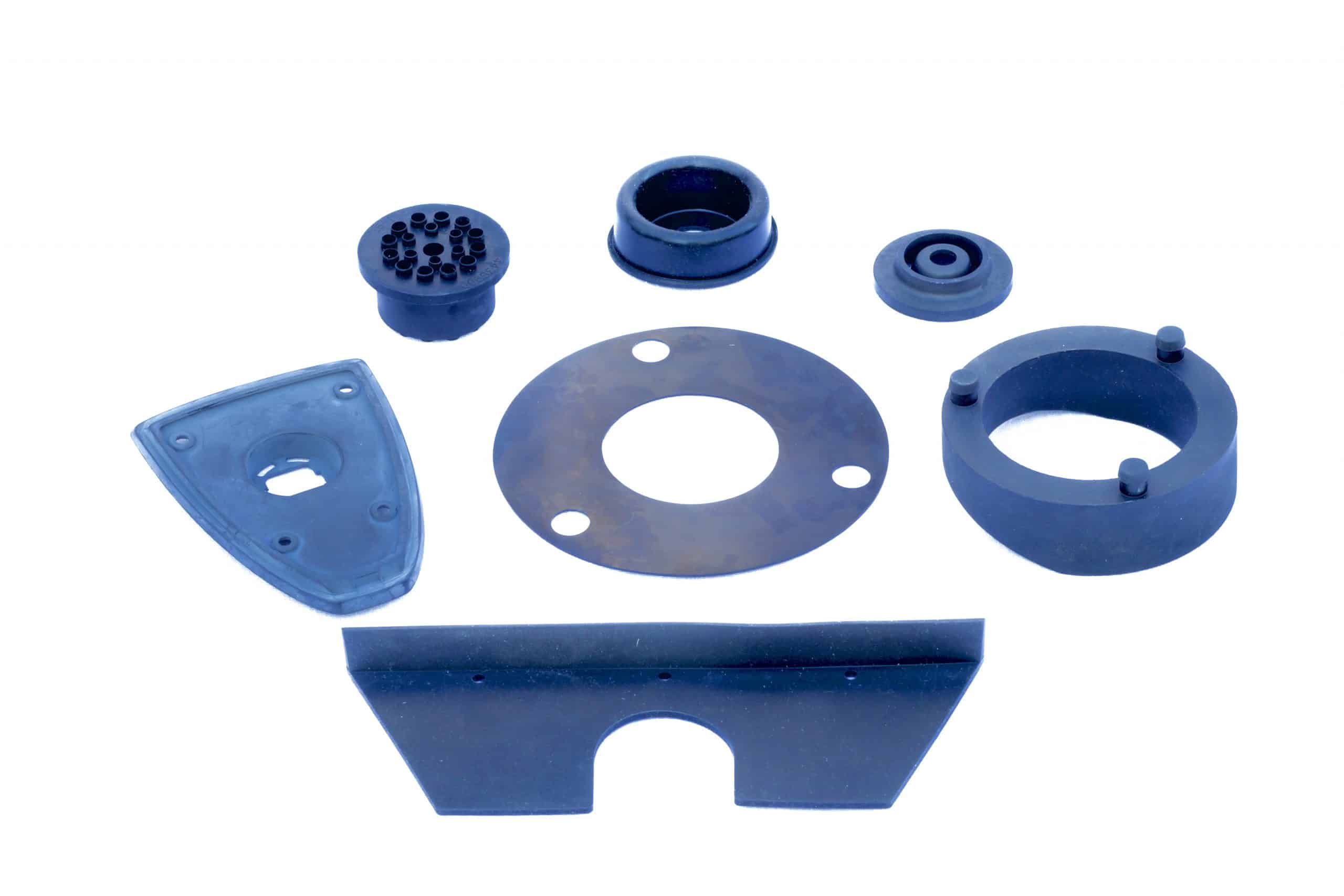
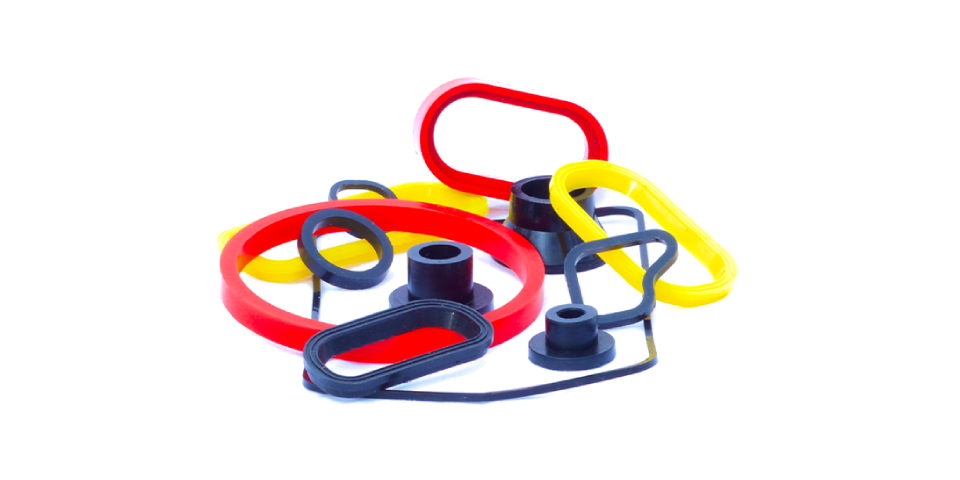
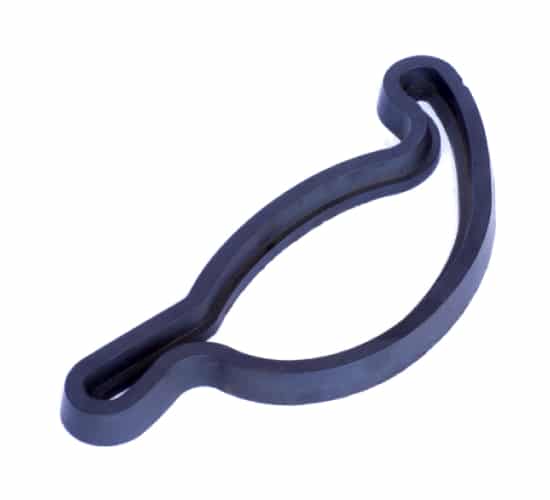
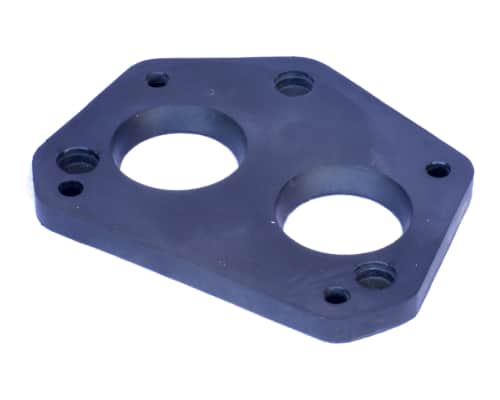
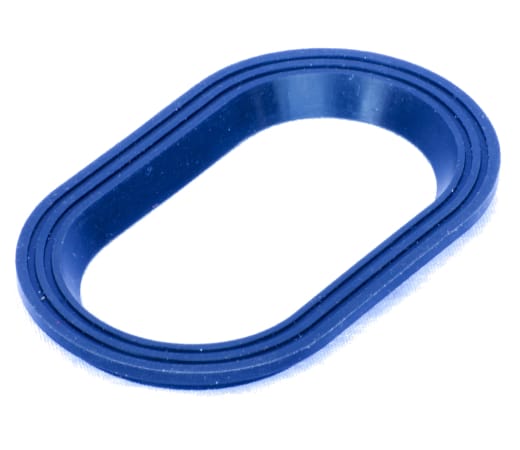
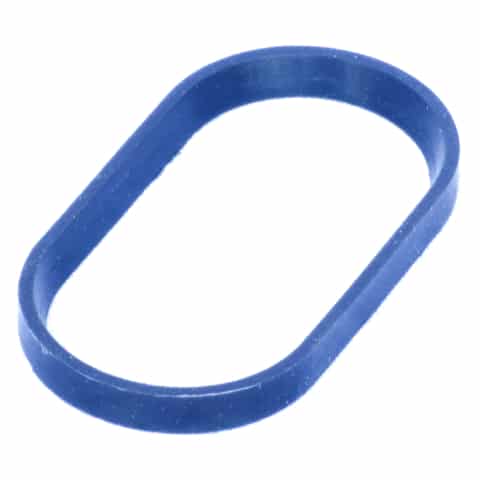
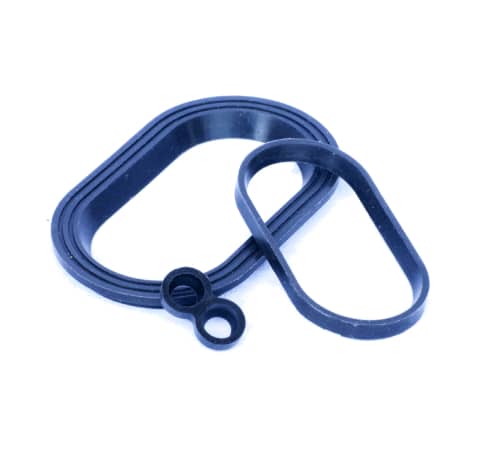
Rubber gaskets are engineered for reliable face-to-face sealing and can be compression molded, transfer molded, or die-cut, depending on the critical dimensions required for the application. Common gasket materials include EPDM, Viton, silicone, neoprene, and nitrile, among others.
Gasket Materials and Properties:
- Neoprene: Molded in a Shore A hardness range of 15 to 95A, neoprene gaskets offer strong rebound along with resistance to animal fats, vegetable fats, oxidizing chemicals, greases, and oils.
- Nitrile: Molded in a Shore hardness range of 30 to 95A, nitrile gaskets provide good rebound and resistance to a wide range of chemicals, hydraulic fluids, hydrocarbons, oils, and greases.
- EPDM: Molded in a durometer range of 30 to 90 Shore A, EPDM gaskets resist ozone, oxidizing chemicals, and both animal and vegetable oils.
- Silicone: Molded in durometers of 30 to 80A, silicone gaskets are ideal for high-temperature environments, offering good rebound and resistance to sodium hydroxide, ozone, and moderate oxidizing chemicals across an operating range of -60°F to 550°F.
For detailed physical and technical specifications, visit our rubber technical data page, which outlines the physical properties of all our rubber compounds. A durometer chart is also available to help compare Shore hardness values to familiar everyday materials.
Rubber Seals
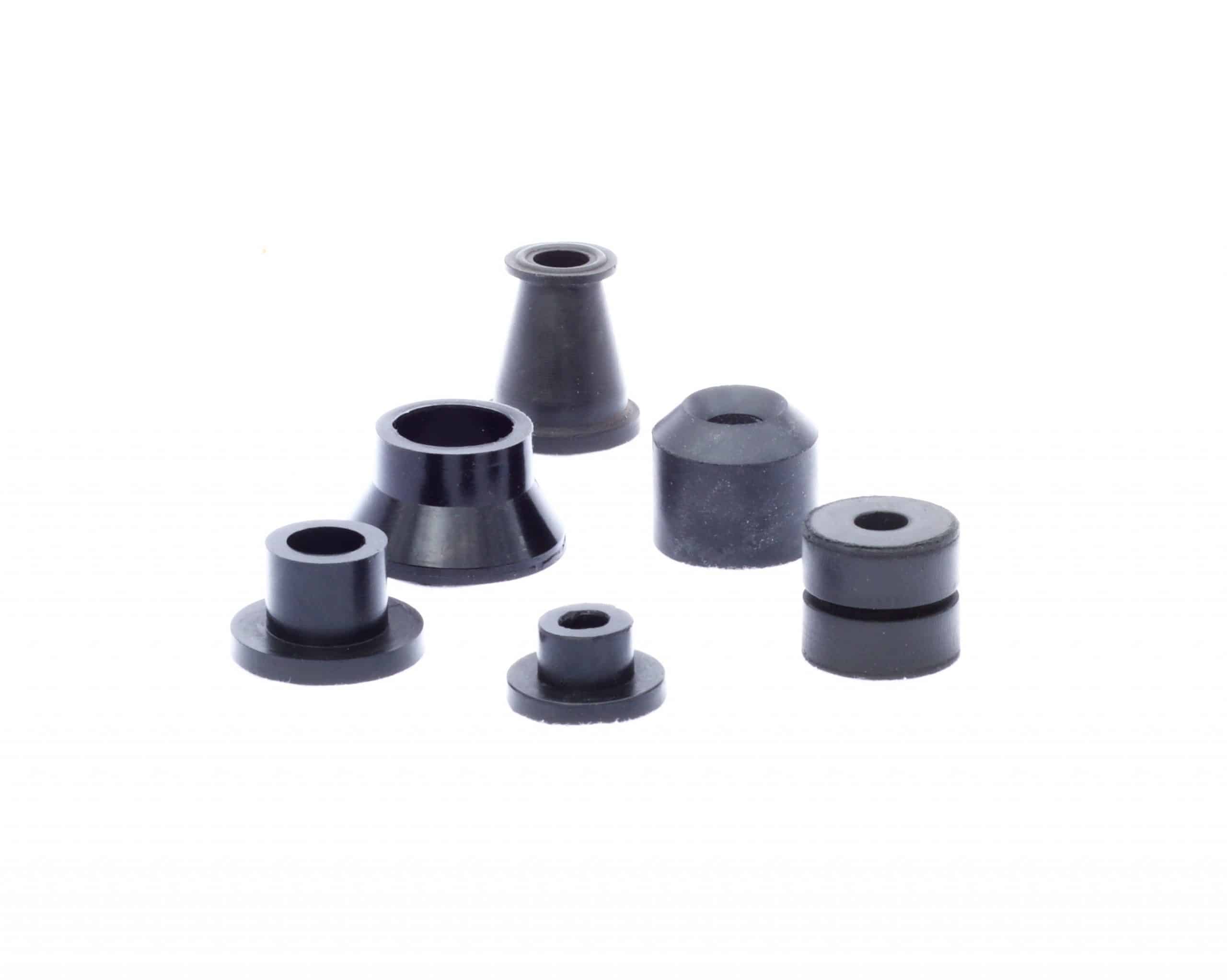
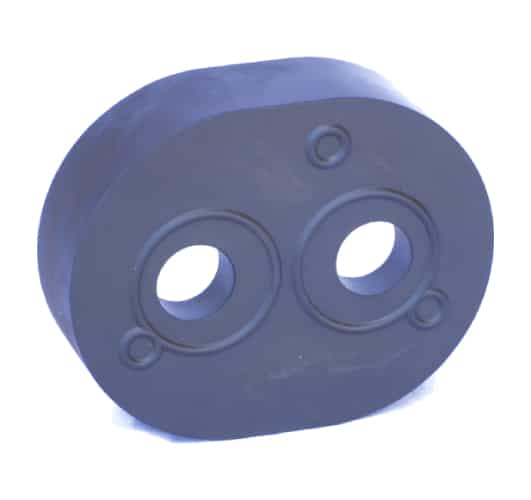
Rubber seals are used across nearly every industry, from automotive and aerospace to prototyping and testing environments. Most rubber seals are compression molded, though die cutting is also available. Seals can be produced in virtually any shape, size, or Shore hardness, using any rubber compound, including higher-performance thermoset polyurethane.
Rubber Bushings
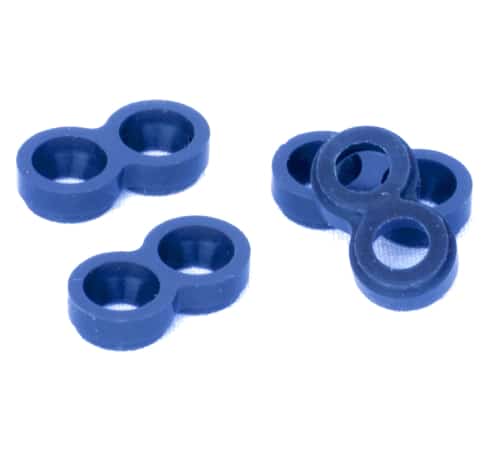
Rubber bushings are a foundational component across many industries. In automotive applications, they’re commonly used as suspension bushings, torque arm bushings, sway arm bushings, and ball joint bushings. Beyond automotive use, rubber bushings also appear in prosthetic limbs, hydraulic cylinder joints, and crane components. Depending on performance requirements, bushings can be produced in traditional rubber or upgraded to higher-performance polyurethane material.
Test Seals and Gaskets
Uniflex produces custom test seals and gaskets for customers who need small quantities before committing to full production, or for leak testing and similar industrial applications. We support both high- and low-volume orders, with no minimum order quantity. Whether you need a single test piece or a production run of thousands, we can accommodate the job, including expedited orders when timelines are tight.
Start Your Custom Rubber Molding Project
Getting started is simple. Send us an email, give us a call, or request a free quote directly on our website. If you have a drawing file from your preferred CAD software, include it with your request. No drawing? No problem. Our team will work with you to develop a custom rubber solution built around your specifications.
Request a quote or contact us to start your next custom rubber molding project.
Frequently Asked Questions
What is the difference between compression molding and transfer molding?
Compression molding involves loading unvulcanized rubber directly into a mold cavity and curing it under heat and pressure, while transfer molding forces the rubber compound through a channel into the mold cavity before curing. Compression molds are typically machined faster, while transfer molding suits parts requiring more precise cavity filling.
What durometer range can Uniflex produce rubber parts in?
Durometer ranges vary by material selection. For example, neoprene can be molded from 15 to 95 Shore A, nitrile from 30 to 95 Shore A, EPDM from 30 to 90 Shore A, and silicone from 30 to 80 Shore A, allowing us to match hardness to the specific demands of your application.
Is there a minimum order quantity for custom rubber parts?
No. Uniflex accepts orders ranging from a single test piece to production runs of thousands, with no minimum quantity required.
What rubber material is best for high-temperature applications?
Silicone is generally the preferred choice for high-temperature environments, with an operating range of -60°F to 550°F, making it well suited for silicone seals and gaskets in demanding operating conditions.
Do I need a CAD drawing to request a custom rubber part?
A CAD drawing helps speed up the quoting and production process, but it’s not required. If you don’t have one, our team will work with you directly to develop a custom rubber solution based on your specifications.
Can rubber bushings be replaced with polyurethane?
Yes. In applications requiring higher load capacity, abrasion resistance, or extended service life, rubber bushings can be substituted with higher-performance polyurethane material.
The Benefits of Choosing Uniflex:
- Over 40 Years of Rubber Molding Experience
- Highly Competitive Pricing
- Both Low and High-volume Production Runs Offered
- Rapid Prototyping
- Short Lead Times
Material Offered:
- Butyl
- EPDM
- Nitrile
- Natural Rubber
- Neoprene®
- Silicone
- Viton®
- Speciality materials available upon request*
More Products
Incredibly useful due to its ability to be molded into a seemingly infinite number of shapes, sizes, and hardness ranges.
We offer high quality, custom rubber compression and transfer molding to produce high quality, economical rubber products that adhere to your specific requirements.
Incredibly useful due to its ability to be molded into a seemingly infinite number of shapes, sizes, and hardness ranges.
We are able to hold the most stringent tolerances that always meet or exceed customer expectations while ensuring an economical price.
We supply more styles and sizes of Kadant Unaflex brand Expansion Joints than any other distributor in the world and offer some of the most competitive pricing available.
Our product line includes molded & pultruded grating, handrail, ladders, structural shapes, stair treads, grating accessories, and FRP doors.
Custom manufactured from our famous non-conductive, ultra-durable UNIDURE© material, our electrical safety devices can be tailored for use in any lockout or tagging situation.
Our press fit cam follower sleeves are designed for ease of use and cost effective/efficient emplacement, while also maintaining exceptionally high quality.
The Uniflex Pipe Coupling has successfully solved frequent leakage, intensive maintenance, and stocking difficulties associated with ground join-pipe unions.